10 October 2022
Malta, less than 400 km from Tunisia, but feels like it's more than a million miles. Think it's safe to say this will definitely be the last time we travel in an arabic country.
We're here for ten days and plan is to spend three days based in the south-east part of Malta, three days on Gozo and the last four days somewhere around Valletta. First port of call was Marsascala and it's a beautiful little place.


Surprisingly good dinner the first night we were there - surprising as felt like were in the middle of an episode of Falwty Towers with manager rushing off in middle of taking our order to sort out a shouty argument in the kitchen and Manuel being replaced with a young chinese trainee.
Anyway dinner was two Maltese dishes. Stuffed Squid (stuffed with shellfish, squid bits and mussels) in a rich red wine sauces and Bragioli aka Beef Olives also in rich red wine sauce but very different from the squid dish.
Both seriously yummy (even if they do look like a scene from Alien).


Went for a drive around the south coast the next day and there lots of little forts all over the place, both modern and not so modern.
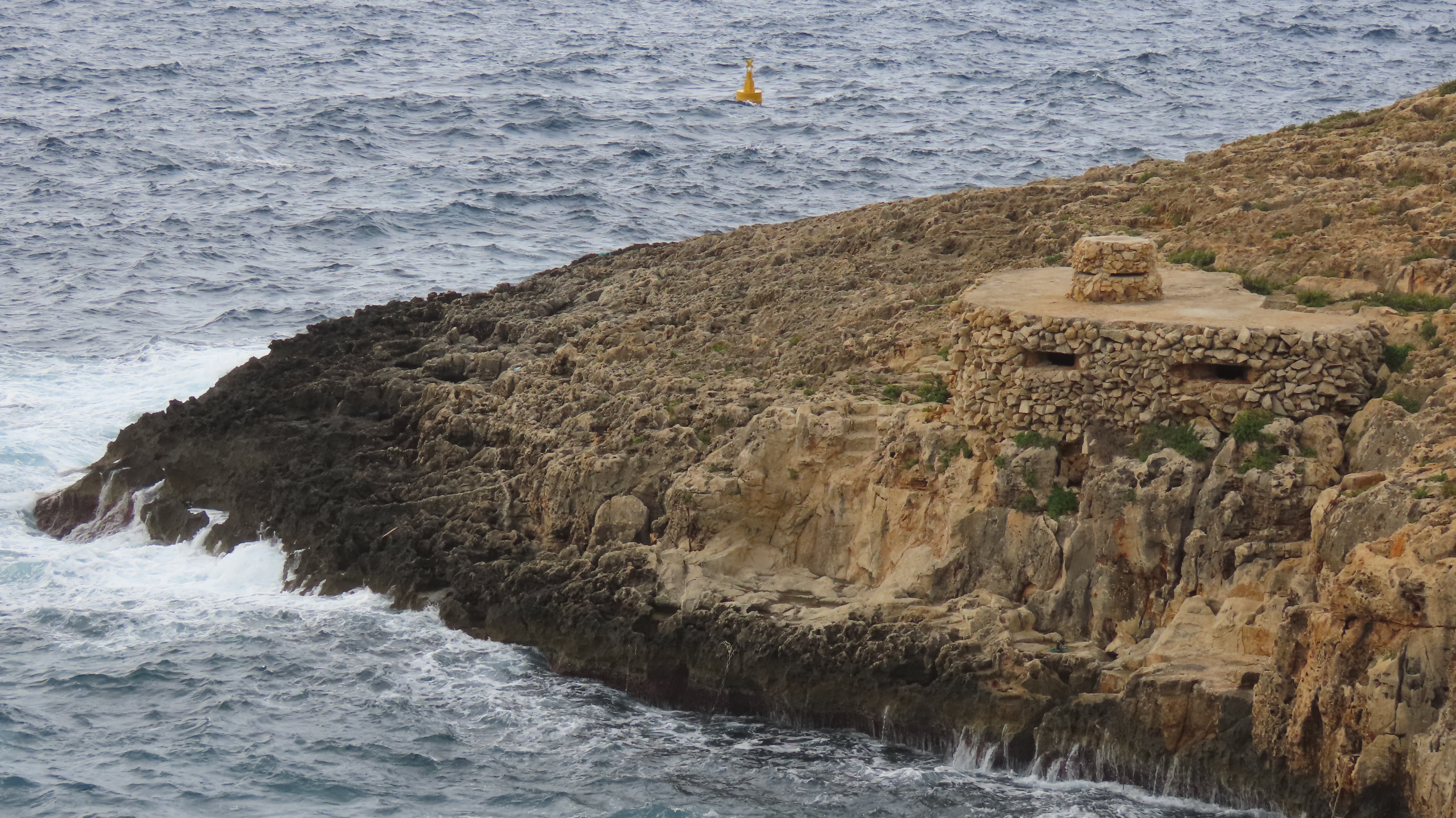
This particular tower, Ta' Xutu, was built in 1647 and severed as prototype for 13 other towers around the island. Having said that there are lots and lots of small square towers all over the place - some for coastal defence and some simply as a watchtower over crops.


From there we headed to one of the big stops around Malta - "Ħaġar Qim". Ħaġar Qim is a megalithic temple dating back some 5,500 years. Temples were aligned either for the sun rising on the equinox (based alignment of various doors and holes in walls) or the rising of the six brightest stars of the Pleiades Constellation (again based alignment of various doors and holes in walls and various rows of dots in the walls that corresponding to the rising of those stars).


Just round the coast from where we are staying are some quite cool salt pans. These pans are all over the island and are still in use from May to September. A large part of what makes them viable I assume is a combination of lots of clear sunny hot days, very flat coastal outcroppings and the fact that the tidal range is about 200mm (for the poms out there that's about 8 inches).

Just past the salt pans is a half built hotel complex that had been abandoned for a good few years. Making it a target for taggers and graffiti. Some of the two very impressive images were Abe (about 3 meters tall) and Gandalf (about 8 metres tall).


The entry ticket to Ħaġar Qim gave us free entry to a couple of other pre historic sites, one of which was the Ghar Dalam cave system. The caves when excavated yielded a lot, and I do mean a lot, of bones and teeth (mainly hippopotamus teeth). Interesting to learn that while most of the world experienced an Ice Age, Malta experienced a Rain Age - thousands of years of rain was responsible for the shaping of the islands, which means gorges and caves.

Small caper bush out sideof the museum - just in case you have ever wondered where capers come from.


harbour filled with traditional Maltese boats.

Another big stop is the Mdina. Mdina is a fortified (very well fortified) city that was founded in about 800 AD and sirs on a local high point.

Quite pleasant just to wander around in as no traffic is allowed and the alleyways are all nice, narrow and shady (it was a stinking hot day). Main Cathedral is very impressive, but must admit didn't have the energy or enthusiasm to go inside (plus the 10 euro entrace fee was a bit steep and have seen lots of Cathedrals etc in Portugal and Spain.


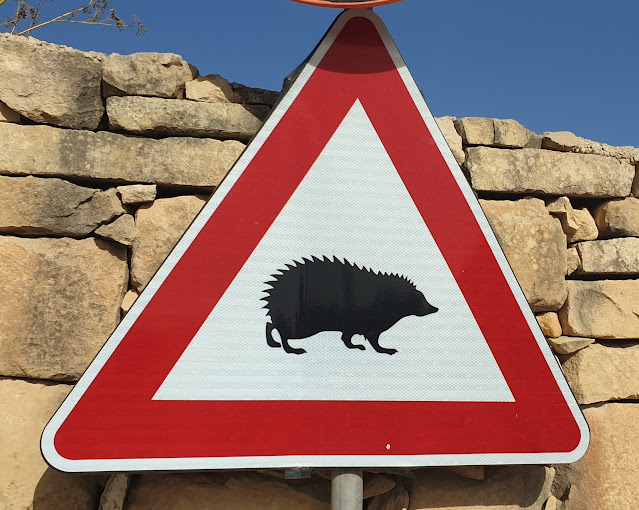

The other road signs we have seen relate to cats. Whilst the hedgehog signs are legit it would appear that the local cat lovers did a bit of crowd funding to get these signs put up.


Second course Sea Breem and Rabbit


Desert - date pastries with ice cream.
En-route to Gozo we took a small detour to check out one of the odder attractions here. The Popeye Village. Apparently in 1980s Popeye (with Robin Williams as Popeye) was filmed here and the set was retained at the end of filming and turned into a small theme park and 40+ years later is till going strong - which is more than can be said of the movie which I seem to recall bombed.


From here we catch a ferry to Gozo (all of thirty minutes away).


Quite pleasant just to wander around in as no traffic is allowed and the alleyways are all nice, narrow and shady (it was a stinking hot day). Main Cathedral is very impressive, but must admit didn't have the energy or enthusiasm to go inside (plus the 10 euro entrace fee was a bit steep and have seen lots of Cathedrals etc in Portugal and Spain.


Next door to the Mdina is Rabat which is home to catacombs of St. Paul and of St. Agatha. These catacombs were used in Roman times to bury the dead as, according to Roman culture, it was unhygienic to bury the dead in the city. If time/energy allows will need to check out at least one of them. However Rabat is also famous for the Crystal Palace Pastizzi shop. Pastizzi and Qassatat are delicious little puff pastry pastries (that are really cheap and quite large). Typically filled with either cottage cheese, chicken, tuna or anchovy paste. These we did have time and energy for.


For the ten days that we are here we opted to hire a car for a couple of reasons. Mainly because the daily rates are cheap (about $50/day) and while getting round by bus is quite doable it is very time consuming. When it comes to choosing to drive on back roads or main roads it's a bit of a case of damned if you do damned if you don't. Back roads tend to be slow driving, narrow and windy but the main roads tend to be chocker with cars and large trucks and quite stressful especially when trying to navigate some v confusing junctions
Around a section of the island you will see various signs warning of hedgehogs. These exist as it appears that the Algerian Hedgehog is one of the most beloved species on Malta.

Haven't actually seen any hedgehogs yet as they are nocturnal but apparently this is what they look like.


As you drive around pretty much every hilltop has some sort of structure on it. Either a little square fortress or a church.

On our last night in Marsascala we decided to have a little bit of a splurge for dinner and went to an upmarketish restaurant called Taj-Familja. For bottle of wine, bread, appetisers, starters, mains, deserts and espressos for two the bill came to $115. Really good value for money and very, very tasty Maltesian food.
Nibbles - butter beans in garlic dressing and broad bean pate.

First course tortellini and fish soup.


Desert - date pastries with ice cream.


.jpg)


